Understanding Court Dictation Errors: Full vs Half Mistakes
Satish Sharma Sir
Published on May 28, 2026
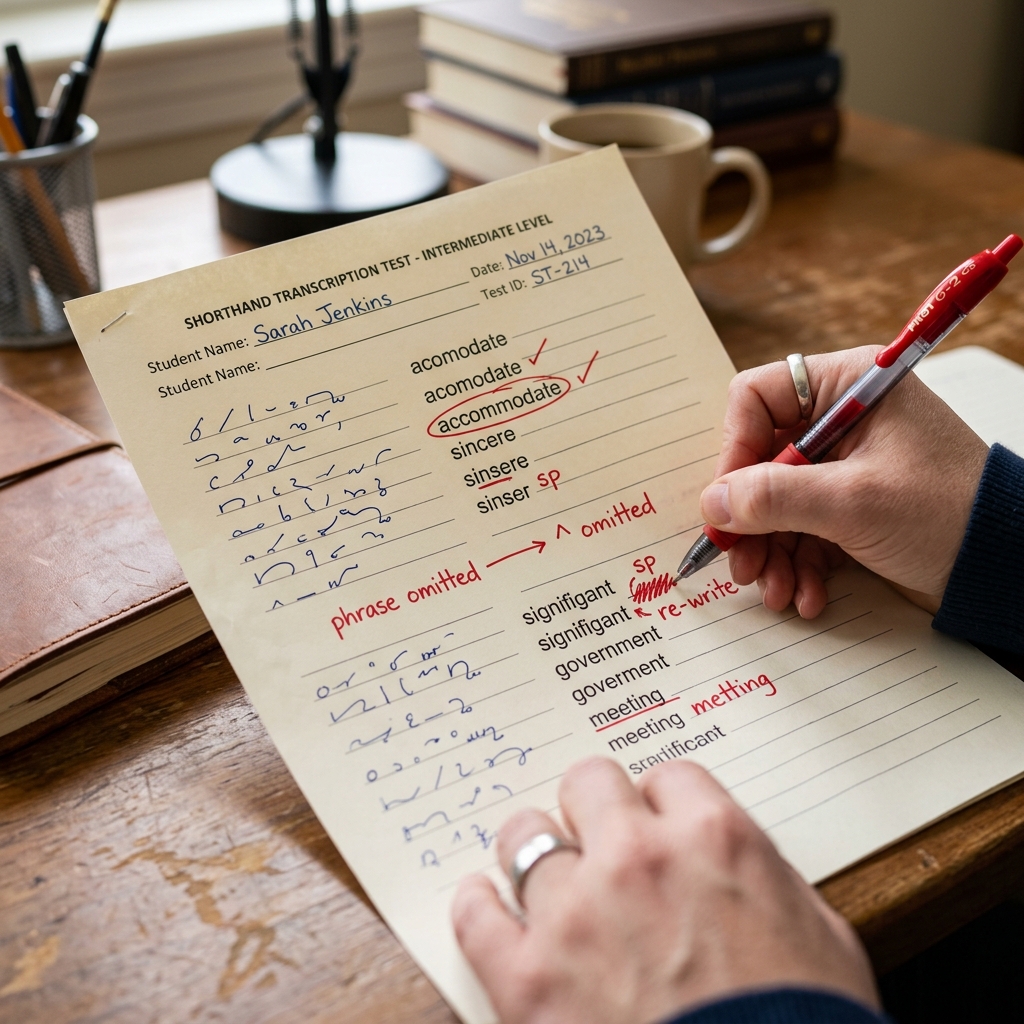
Stenography evaluation methods vary significantly across exams. Understanding the precise difference between Full Errors and Half Errors is critical for adjusting your transcription priorities during practice.
What Constitutes a Full Error?
A Full Error results in a 1-mark deduction. In most court stenography tests (and SSC exams), full errors are recorded for the following mistakes:
- Omissions: Every word left untranscribed.
- Substitutions: Replacing a target word with a completely different word.
- Additions: Typing words that were never read in the dictation.
What Constitutes a Half Error?
A Half Error results in a 0.5-mark deduction. These are generally styling or typo errors, including:
- Spelling Mistakes: Incorrect spelling of transcribing words.
- Singular/Plural errors: Writing 'village' instead of 'villages' or vice versa.
- Case errors: Failing to capitalize proper nouns (e.g. writing 'delhi' instead of 'Delhi').
- Punctuation mistakes: Omission of full stops or paragraphs.
Practical Practice Strategy
Always prioritize flow over punctuation. If you miss a word outline, skip it immediately to catch the next outline, rather than stalling and causing a cascade of multiple omissions.
Want to clear your target Skill Test?
Practice outlines and transcribe audio dictations in India's best steno training lab.